
Table of Contents
Introduction
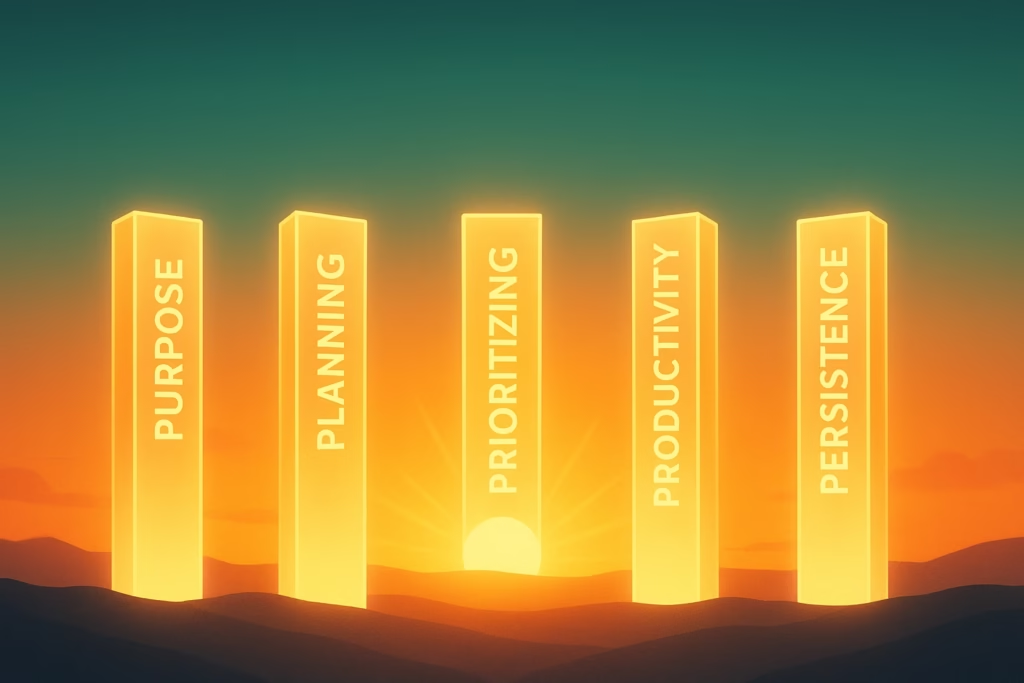
In our fast-paced world, where distractions seem to pop up everywhere and life can feel like a whirlwind, mastering the 5 Ps of Time Management can truly change the game. These 5 Ps—Purpose, Planning, Prioritizing, Productivity, and Persistence—offer a solid framework to help you regain control of your day, ease that overwhelming feeling, and create a life that’s not just busy, but also meaningful, focused, and balanced.
Time isn’t just about counting minutes and hours. Time is about energy. Time brings clarity. Time shapes your life’s direction.
This comprehensive guide , 5 Ps of Time Management, will dive deep into each of the Ps, backed by research, expert insights, internal and external references, engaging image prompts, FAQs, and a compelling call to action.
Let’s kick off your transformation!
1. PURPOSE – Your “Why” Behind Every Action
Purpose stands as the first pillar of the 5 Ps. It’s all about understanding why you do what you do. Without a clear purpose, each day can feel a bit aimless. But when you have purpose, every day takes on a deeper meaning.
Why Purpose Matters
- It clears up confusion
- It cuts out unnecessary tasks
- It helps you prioritize what truly matters
- It boosts your confidence and emotional energy
Research from Harvard Business Review indicates that individuals who have a clear long-term direction tend to perform better and handle stress more effectively.
How to Find or Strengthen Your Purpose
- Jot down your top 3 life goals
- Ask yourself: “Why is this important to me?”
- Eliminate tasks that don’t align with your purpose
- Review your goals on a weekly basis
Motivational Insight
When your purpose is well-defined, your path becomes much clearer. You stop chasing after everything and start focusing on what genuinely propels your life forward.

2. PLANNING – A Structure That Saves Time & Energy
Planning is the second P, transforming your purpose into a daily roadmap.
Why Planning Works
Research from MindTools and time-management experts shows that planning enhances:
- Focus
- Time efficiency
- Mental clarity
- Speed of task completion
Daily Planning Method
Give this straightforward 10-minute morning planning ritual a shot:
- List your top 3 priority tasks
- Schedule your most crucial task for the morning
- Set aside time blocks for deep work
- Include a 1–2 hour buffer for any unexpected tasks
Weekly Planning Routine
- Reflect on your wins
- Assess any mistakes
- Establish goals for the week ahead
- Make necessary adjustments to your schedules
Motivational Insight
For every minute you invest in planning, you save 10 minutes in execution. Planning isn’t just extra work; it’s a strategy.

3. PRIORITIZING – The Art of Focusing on What Truly Matters
Not every task needs your attention.
Not every task should be treated as urgent.
Not every task should be treated as urgent.
Prioritizing allows you to channel your time into actions that really matter.
How to Prioritize Effectively
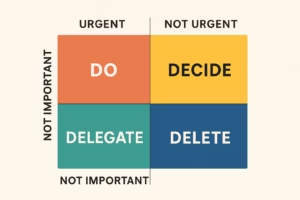
✔ Eisenhower Matrix
Break down tasks into:
- Important & urgent
- Important but not urgent
- Urgent but not important
- Neither
✔ ABCD Method
- A = Must do
- B = Should do
- C = Good to do
- D = Delete or delegate
✔ “Eat the Frog” Technique
Tackle your toughest and most crucial task first thing in the morning.
Motivational Insight
Your energy peaks in the morning—use it for tasks that pave the way for your future, not for those that just drain your time.
4. PRODUCTIVITY – Building Habits That Multiply Your Time
Productivity is the fourth P.
It’s not about rushing through everything—it’s about consistently tackling the right tasks.
Productivity Principles That Work
1. Pomodoro Technique
25 minutes focus
Take a 5-minute break
Repeat this 4 times, then enjoy a longer break
2. Remove Digital Noise
Turn off:
- Notifications
- Social media alerts
- Messaging distractions
3. Time Blocking
Set aside specific hours for:
- Work
- Learning
- Breaks
4. Habit Stacking
Combine a new habit with one you already have (inspired by James Clear’s Atomic Habits).
Motivational Insight
Small habits practiced daily can lead to incredible results over time.

5. PERSISTENCE – Staying Consistent Even on Difficult Days
Persistence is the last P in Time Management. It’s what keeps you moving forward when your motivation starts to wane.
Anyone can kick things off. But only a few stick with it. Consistency is what turns ordinary people into champions.
How to Cultivate Persistence
- Review your progress each week
- Set realistic goals
- Celebrate those small victories
- Keep track of your habits
- Remind yourself why you started
Why Persistence is Effective
A Stanford research study shows that consistency beats talent when achieving long-term goals.
Motivational Insight
A study from Stanford reveals that consistency often trumps talent when it comes to reaching long-term goals.

Conclusion. 5 Ps of Time Management
The 5 Ps of Time Management—Purpose, Planning, Prioritizing, Productivity, and Persistence—aren’t just guidelines; they represent a whole mindset. When you embrace these five steps, life transforms into something that feels:
- clearer
- more focused
- more intentional
- more productive
You don’t necessarily need more hours in the day. What you really need is better direction. And that’s exactly what these Ps provide!
CTA
Start applying the 5 Ps today. Choose one P, apply it for 7 days, and watch how your life, focus, and confidence transform.
Your time is your power—protect it, use it, and shape your future. Follow www.mindliftly.com
Internal Linking Suggestions
- Best Virtual AI Life Coach 2025 for Confidence & Motivation
- Best AI Life Coach for 2025 – Excalibur vs Competitors
- Personal Development Hacks 2025: Viral Habits in USA
External References
- Harvard Business Review – Productivity research
- James Clear – Habit building principles
- MindTools – Time management models
- Stanford Research – Consistency studies
FAQs . 5 Ps of Time Management
1. What are the 5 Ps of Time Management?
The 5 Ps stand for Purpose, Planning, Prioritizing, Productivity, and Persistence—five key principles that can help you manage your time more effectively.
2. Why are the 5 Ps important?
They enhance focus, lower stress levels, boost productivity, and provide clarity to your everyday routine.
3. Who can use the 5 Ps model?
Anyone from students and professionals to HR managers, entrepreneurs, leaders, and anyone else looking to take better control of their time.
4. How fast can I see results?
Many individuals notice improvements within the first 24 hours, with significant changes often occurring in 2 to 4 weeks.
5. Are the 5 Ps scientifically supported?
Absolutely. Research from institutions like Harvard and Stanford, along with various productivity frameworks, supports the idea of purpose-driven planning and the importance of building consistent habits.
About the Author
👤 Muhammad Ibrahim – Founder of Mindliftly
Muhammad Ibrahim is a technology writer and wellness advocate who loves to dig deeper into the potential of AI to enhance mental well-being, productivity, and personal growth. An experienced researcher with years of tracking emerging technologies, he brings scientific perspective and actionable strategies to guide readers to understand AI-fueled tools for daily calm and clarity.
Through Mindliftly, Ibrahim offers guides, comparisons, and action plans that link AI innovation to people’s well-being. His vision is straightforward: to enable humans to live more conscious, stress-free lives through responsible and effective use of AI.
📩 Connect with Muhammad:
- Website: Mindliftly.com


