
Table of Contents
Introduction
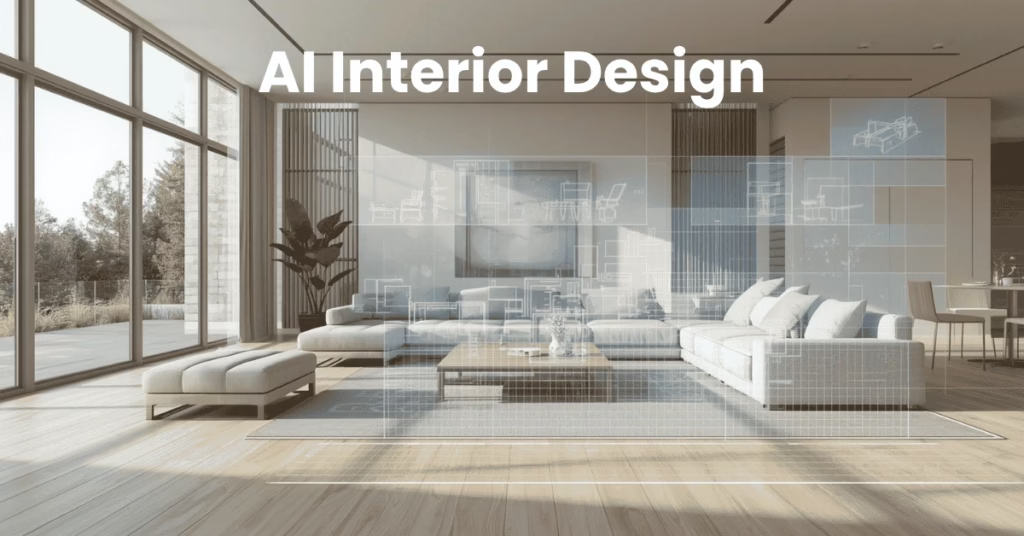
AI is really changing the game when it comes to how we create and style our living spaces. Thanks to AI Interior Design tools, even those without a design background can whip up professional-quality home décor ideas in just a few minutes. In this approachable guide, we’ll dive into how generative AI, smart apps, and cutting-edge technology are revolutionizing traditional interior design. We’ll touch on the latest trends, highlight the best tools, discuss the real benefits for homeowners, point out some common limitations, and answer your burning questions about the future of home décor driven by AI.
AI Interior Design Tools and Technologies
Today’s AI-driven interior design is all about leveraging smart software and apps that can analyze room photos and propose fresh layouts, color schemes, and furniture options. Take HomeVisualizer, for instance: you can upload a picture of your space alongside an inspiration image, and the AI will whip up an “uncannily accurate” rendering that merges your original room with the vibe of the inspiration. This means you can see your living room transformed into styles like Coastal or Art Deco in no time. houseandgarden.co.uk.
These tools often harness generative AI (the same tech that powers image generators like Stable Diffusion or Midjourney) to craft stunning designs. Even chatbots like ChatGPT have jumped into the interior design game: by uploading a photo of your room and discussing your tastes, ChatGPT can suggest décor tweaks, recommend a new paint color, or even create a mood board. Plus, ChatGPT and its rivals (like Google’s Gemini and Anthropic’s Claude) are getting better at grasping room layouts and style preferences, making them surprisingly useful for quick design tips. businessofhome.com.
Many specialized apps There’s a whole range of specialized apps available. Some are geared towards floor planning (think Planner5D or HomeDesignsAI), while others help you choose furniture or color palettes. Popular AI design tools include RoomsGPT, Foyr Neo, Spacely AI, and even AI features in apps like Canva or Houzz. As one article points out, these apps are meant to complement traditional design – they’re “not intended to replace a designer at all, but shave time and hassle off elements of the home renovation process.” In practice, this means you can quickly experiment with a variety of layouts or styles with just a few clicks: AI can automatically furnish a virtual room, suggest coordinating pillows or artwork, and even create a complete 3D mockup. This cutting-edge technology opens up a world of creative possibilities: Imagine having a tool that can suggest the perfect furniture arrangement for your space or transform a simple photo of your bathroom into a stunning “Japandi” style masterpiece in just seconds. That’s what AI can do—it doesn’t make decisions for you; instead, it serves as a helpful partner in your design journey. houseandgarden.co.uk

AI Interior Design Benefits for Homeowners
AI Interior Design brings a world of benefits for both homeowners and designers. One of the standout perks is the incredible speed and cost efficiency it offers. In the past, creating stunning, photorealistic room renderings or experimenting with various décor styles could take ages and cost a pretty penny. Designers often found themselves spending countless hours redrawing spaces or shelling out for expensive software just to visualize their ideas. But with AI, those tedious tasks are streamlined: you can completely transform a room in mere seconds. For instance, the CEO of HomeVisualizer points out that using AI for rendering makes everything “quicker and easier,” serving as a handy “off-the-shelf” solution for those who love DIY projects. This means you don’t have to hire an expensive designer just to get a glimpse of how a new wall color or piece of furniture might look in your space. houseandgarden.co.uk. T
Another fantastic advantage is the level of personalization AI Interior Design can provide. These tools can learn your unique style based on your inputs. If you share images of your favorite rooms or describe your preferences (like saying, “I’m into modern Scandinavian design”), the AI can whip up designs that resonate with you. It can even suggest products that fit your budget! Many platforms leverage sophisticated algorithms to select furniture and décor that not only complement each other but also suit the dimensions of your room. For example, companies like IKEA and Houzz utilize AI-driven image searches to recommend similar furniture pieces from their catalogs.

AI is also a game-changer when it comes to boosting creativity and confidence. By automatically generating a variety of mood boards or layouts, homeowners can discover inspiring combinations they might never have considered. Tools like Midjourney or Stable Diffusion can blend different styles (think “industrial loft meets bohemian textiles”) to ignite new ideas. It’s like having a seasoned stylist at your fingertips, presenting you with a range of options. As highlighted in one industry article, this can be particularly empowering for those just starting out: AI tools act as a “ready-to-use resource for amateur designers” eager to visualize their remodels quickly.
On the flip side, designers also reap the rewards. AI takes care of the tedious tasks—like labeling furniture, adjusting lighting, or optimizing space—allowing designers to concentrate on their creative vision. According to Decorilla, AI can enhance many behind-the-scenes processes by delivering data-driven insights and visualizations. In a nutshell, AI Interior Design makes home décor quicker, more budget-friendly, and a lot more enjoyable by handling the heavy lifting for you.
AI Interior Design Challenges and Limitations
While the world of AI Interior Design is thrilling, it’s not without its flaws. One major drawback is its accuracy and understanding of context. Many current AI designs tend to overlook real-world factors like wall lengths, window placements, plumbing, and more. As experts point out, these designs often end up being “purely conceptual.” For instance, a generated image might miscalculate the size of a coffee table or miss a hidden column entirely. Tools like Midjourney can certainly capture your desired “Japandi” style, but they often fail to consider the precise dimensions of a room or the actual sizes of products. So, while AI-generated visuals can spark inspiration, they aren’t quite ready to be plugged directly into a construction plan.
Another challenge we face is the absence of human nuance. Interior design is such a personal journey, intertwined with emotions, culture, and practical needs. Decorilla points out that while AI can be a fantastic resource, interior design “remains uniquely human” because it’s all about grasping personal tastes, cherished memories, and individual lifestyles. Sure, an AI might suggest a cozy living room by throwing in some fuzzy throws (a classic trick), but it wouldn’t have a clue if your family has cats that love to destroy those throws or if you lean towards minimalism to create a stress-free haven. It can keep up with trends, but it simply can’t tell the unique story of a household. Decorilla
Quality can really differ when it comes to AI tools. Since these technologies are still relatively new and not heavily regulated, as noted by House & Garden, many of the apps out there yield mixed results. Sometimes, the style templates or images they generate can come off as pretty generic. For instance, chatbots like ChatGPT might suggest paint brands or room layouts that sound good on paper, but they could end up recommending products that don’t actually exist or miss some practical details altogether, as highlighted by businessofhome.com. In one instance, AI provided some solid advice—like suggesting to “add a mirror to a small room”—but it also had moments where it just made things up.
It’s becoming clear that ethical and copyright concerns are starting to surface. A lot of AI art generators rely on copyrighted images for training, which brings up some tricky legal questions, especially when the output closely resembles the work of established designers. These challenges are still unfolding, but they serve as a reminder that AI creations are built on learned patterns rather than the unique spark of human creativity.
In a nutshell, think of AI interior design tools as your creative sidekicks – they’re quick and enjoyable for brainstorming ideas, but they shouldn’t be your only source of truth. As one expert puts it, AI acts more like a mood board creator rather than a detailed blueprint; interior designers still have the important job of fine-tuning AI’s suggestions to make sure the design truly complements the space.
AI Interior Design Future and Trends
The future of AI in interior design is looking incredibly promising and dynamic. Experts in the industry are forecasting remarkable growth: the global market for AI in this field is expected to jump from around $1.09 billion in 2024 to a staggering $3.59 billion by 2029. One report highlights a 27% increase each year, driven by advancements in smart home technology, the integration of AR and VR, and a rising demand for personalized design solutions. Surveys indicate that approximately 65% of professional designers are already incorporating AI tools into their processes, and around 72% of design studios believe that AI will soon take on the more complex aspects of spatial planning. nssmag.com.

As we look to the future, get ready for even more AI integration in our lives. Tools like ChatGPT and Google’s Gemini are improving their ability to understand images, which means you could soon ask a virtual assistant to “redesign my bedroom with a Scandinavian theme” just by using your voice. Furniture stores like IKEA are set to enhance their AR apps, allowing you to virtually place any chair in your home and see it in full scale. Plus, voice-controlled home AI might even suggest decor changes based on the seasons or how you’re feeling.
Generative technology is on the rise, and it’s only going to get better. In the future, AI tools will probably let you refine your designs in multiple stages. Imagine creating a room layout and then asking the AI to adjust a corner or swap out a sofa. Plus, software will dive deeper into augmented reality. Instead of merely placing an object over your camera view, apps will be able to re-create entire rooms in real-time, reflecting your chosen styles. Get ready for enhanced 3D walk-throughs of your newly remodeled home!
When it comes to creativity, AI is truly breaking new ground in aesthetics. Designers are teaming up with AI to craft “spaces born from algorithms,” as one industry expert puts it. Just picture a kitchen designed by feeding an AI a mood and letting it whip up some unconventional layouts, or chairs that blend various styles based on a simple text prompt. By 2026, we can expect that almost all design and graphics tools—think Adobe, Canva, Figma, and the like—will be packed with AI features, from generating textures to automatically arranging layouts. In this envisioned future, interior design evolves into a collaborative process: designers or homeowners will sift through AI-generated options, using their own judgment to pick what resonates. AI speeds up the brainstorming process and even takes care of video walkthroughs (with tools like Runway and Kling already bringing interiors to life), but the human touch will always be essential in making the final choices. nssmag.com.
Key takeaway: AI in interior design is evolving rapidly. To keep up, homeowners should try out new apps, stay updated on industry trends, and be open to mixing AI-generated ideas with their personal style. The age of smart, AI-enhanced home design has arrived, merging cutting-edge technology with individual creativity.
AI Interior Design FAQs
What is AI interior design? AI Interior Design is all about harnessing the power of artificial intelligence—think machine learning and generative tools—to help you create the perfect interior for your home. This can involve everything from automated room layouts and style recommendations to virtually staging furniture in your space. Instead of spending hours sketching, you simply provide the AI with photos of your room and your style preferences, and it whips up design ideas or renderings for you. It’s like having a digital design assistant that can quickly showcase fresh looks for your space.
How do AI interior design tools work? Most of these tools operate using sophisticated algorithms that analyze your input, whether it’s a photo or a written description. They often utilize generative AI models—similar to those found in art applications—or specialized design algorithms. For instance, a tool might employ a neural network that has been trained on thousands of room images to grasp different furniture styles. You upload a picture of your room and select a design style (or share an inspiration image), and the AI then reimagines the image or creates a new 3D model that blends your room with the chosen style. Some tools might even ask you a series of questions or use augmented reality to place virtual objects in your camera view. In essence, the AI learns from a wealth of design data and applies those insights to your project.
Can AI interior design replace a human designer?Can AI interior design really take the place of a human designer? The answer is no—not entirely. Experts are quick to point out that AI is more of a helpful tool rather than a substitute for human creativity. While AI can whip up design concepts and speed through tasks, it simply doesn’t possess the human touch, emotional understanding, or the technical expertise that a real designer brings to the table. According to Decorilla and others, interior design is deeply personal; it’s all about grasping a client’s lifestyle, feelings, and specific needs. AI might throw out some trendy color palettes or layouts, but it’s a human designer who evaluates practicality—like plumbing, budget, and ergonomics—and infuses that emotional connection into the design. In essence, AI can help brainstorm and generate ideas, but it’s the human designer (or the homeowner) who ultimately curates and brings the final vision to life.
What are some popular AI interior design tools? There’s quite a variety! Some of the more recognized ones include Planner5D, Homestyler, RoomGPT, and Foyr Neo for 3D planning. For style renderings, you might check out HomeVisualizer and Morpholio Board. Plus, there are AI chatbots like ChatGPT and Google Gemini that can offer design tips. Augmented reality apps from furniture brands, such as IKEA Place and Houzz, allow you to virtually ‘place’ items in your space. New tools are popping up all the time; for instance, “InteriorAI” lets you transform photos of your rooms into a multitude of style variations. The best approach is to experiment with a few—many offer free demos—to find the one that suits your needs. And don’t forget to read reviews and check privacy policies, as some apps may store your data.
How much does AI interior design cost? Well, it really depends! Many basic AI design apps offer free or freemium versions, allowing you to whip up simple designs without spending a dime. If you opt for paid options, like monthly subscriptions or one-time fees, you can unlock higher-resolution images, a wider variety of styles, or even professional features. For instance, a service that creates photorealistic renders might charge you per image or include it in a pro plan. But don’t underestimate the free tools—they can still spark some great ideas! Overall, using AI tools tends to be more budget-friendly than hiring a designer, making it a fantastic way to play around with different layouts and color schemes.
What are the future trends in AI interior design? Looking ahead, we can expect tools to become even smarter and more realistic. AI will improve its ability to understand photos, merging capabilities like ChatGPT with design. We’ll likely see deeper integration of AR and VR—imagine being able to virtually stroll through your newly designed home before moving a single piece of furniture! Text-to-image generators will get better at helping you visualize your ideas, like “picture this room with these features.” And who knows? One day, voice assistants might even help you tweak your home’s design just by chatting with you—like saying, “make my living room cozier.” Plus, there’s a growing focus on sustainability and personalized data: AI could recommend eco-friendly materials or optimize natural lighting for your space. The bottom line is clear: AI is set to enhance the design process, making it quicker and more creative, while still keeping the human touch alive.
Conclusion and Call to Action
AI Interior Design is truly revolutionizing the way we approach home décor, seamlessly merging technology with creativity. With user-friendly and powerful tools right at your fingertips, you can reimagine your bedroom or living room in just seconds. These AI tools not only save you time and money but also ignite fresh ideas, making design accessible to everyone. Just a quick reminder, though: while AI is a fantastic creative assistant, it’s not here to replace your unique vision. You still have the important job of curating the results, adding your personal flair, and making the final design truly yours. houseandgarden.co.ukdecorilla.com.
Ready to transform your space? Dive into an AI interior design app today—many of them even offer free trials! Play around with different styles and see your home from a whole new perspective. Don’t forget to share your AI-generated designs with friends or on social media to gather some feedback. Whether you’re sprucing up a single room or planning a complete home transformation, AI can help you visualize your dream home faster and more effortlessly than ever.
Get started now: So, what are you waiting for? Choose an AI design tool, upload a photo of your room, and let the AI spark your creativity. The future of home décor is smart, and AI Interior Design is here to help you craft a space you’ll love. Happy decorating!
- More Readings .
- Latest GPT Model 2026 | New OpenAI Features & What It Means .
- How to Make Money Online in the USA (2025 Guide).
- Agentic AI for Small Business: How to Boost Growth in 2026.
- Personal Development Hacks 2025: Viral Habits in USA.
About the Author
👤 Muhammad Ibrahim – Founder of Mindliftly
Muhammad Ibrahim is a technology writer and wellness advocate who loves to dig deeper into the potential of AI to enhance mental well-being, productivity, and personal growth. An experienced researcher with years of tracking emerging technologies, he brings scientific perspective and actionable strategies to guide readers to understand AI-fueled tools for daily calm and clarity.
Through Mindliftly, Ibrahim offers guides, comparisons, and action plans that link AI innovation to people’s well-being. His vision is straightforward: to enable humans to live more conscious, stress-free lives through responsible and effective use of AI.
📩 Connect with Muhammad:
- Website: Mindliftly.com


