
Table of Contents
Introduction: Search Is Changing Faster Than Ever
The landscape of search in 2026 is a far cry from what it was just a few years back.
Gone are the days when people would click through ten blue links to sift through results. Now, they turn to AI tools for quick, straightforward answers.
They’re using platforms like ChatGPT, Google SGE, Perplexity, and Copilot. These tools can distill vast amounts of information from the web in mere seconds.
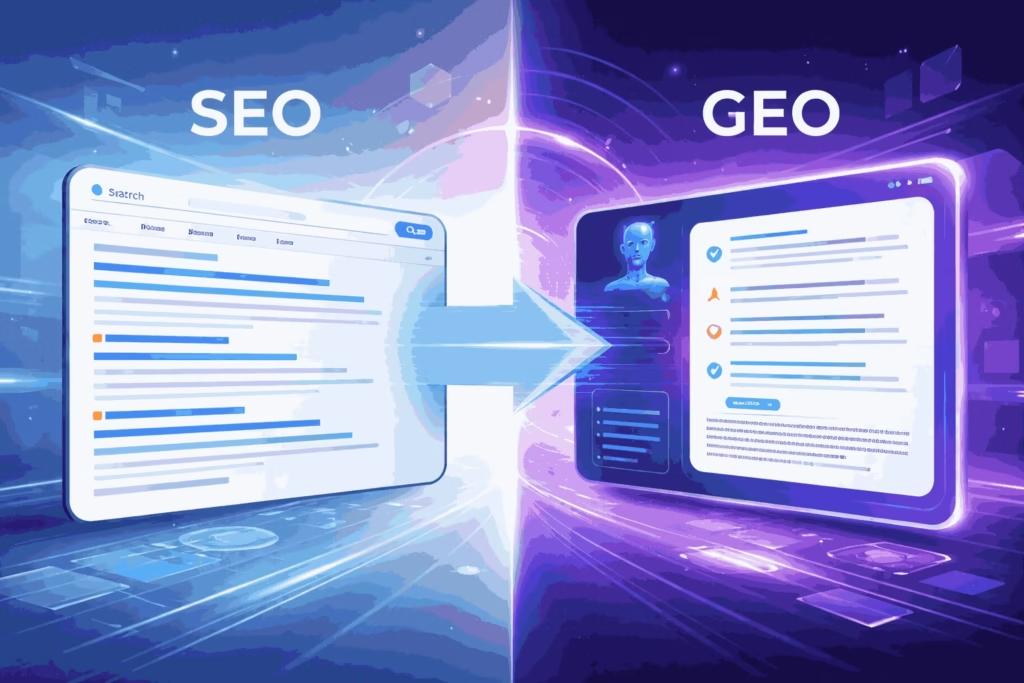
This transformation, GEO vs SEO for 2026 is a game changer.
While traditional SEO still holds value, it’s no longer sufficient on its own.
A fresh concept is emerging: GEO (Generative Engine Optimization).
To gain visibility in 2026, it’s crucial to grasp the differences between GEO and SEO. Even more importantly, you need to learn how to effectively blend the two.
This guide, GEO vs SEO for 2026, is here to help you navigate that journey.
What Is SEO? (A 2026 Perspective). GEO vs SEO for 2026
SEO, or Search Engine Optimization, is all about getting your content to rank well on search engine result pages (SERPs).
In simpler terms, SEO is what helps your website get noticed on platforms like Google and Bing.
Core Goals of SEO. GEO vs SEO for 2026
- Achieve higher rankings for relevant keywords
- Boost organic traffic
- Enhance click-through rate (CTR)
- Establish authority and trust
Let’s be clear: SEO is very much alive. It has simply evolved over time.
SEO Elements That Still Matter in 2026. GEO vs SEO for 2026
On-Page SEO
- Well-optimized titles and meta descriptions
- A clear structure with H1, H2, and H3 tags
- Proper keyword placement
- Image alt text for accessibility
Technical SEO
- Fast loading speed
- Mobile-first design approach
- Clean and user-friendly URLs
- Schema markup for better indexing
Content SEO
- Valuable, long-form content that engages readers
- Matching content to search intent
- Regular updates to keep information fresh
Off-Page SEO
- High-quality backlinks
- Brand mentions across the web
- Establishing topical authority
👉 Example:
For example, a blog post optimized for “Viral ChatGPT Image Prompts” can perform well if it aligns with user intent and provides real value.
Suggested internal link:
Link here to:
mindliftly.com/ai-photo-prompts-the-4-part-formula-to-generate-viral-images/
What Is GEO? (Generative Engine Optimization Explained)
GEO stands for Generative Engine Optimization.
GEO, or Generative Engine Optimization, is all about fine-tuning content for AI-driven answer engines.
These engines don’t just rank pages; they summarize, quote, and recommend sources instead.
How GEO Works
AI tools:
- Scan reliable websites
- Pull out key insights
- Generate answers
- Reference authoritative content
Your aim with GEO is straightforward:
👉 Become the go-to source that AI trusts and cites.
GEO Is Not About Keywords Alone
Instead, GEO focuses on:
- Clarity
- Context
- Authority
- Accuracy
- Structure
👉 Example:
For instance, if someone asks ChatGPT: “What’s the difference between GEO and SEO?”
Your content could show up in the response—even if it’s not sitting at the top of Google’s rankings.
That’s pretty powerful!

GEO vs SEO: Key Differences You Must Know
Let’s break it down in a straightforward way.
SEO Focuses On:
- Rankings
- Keywords
- Clicks
- SERPs
GEO Focuses On:
- AI citations
- Contextual relevance
- Trust signals
- Zero-click visibility
Simple Comparison. GEO vs SEO for 2026
| Aspect | SEO | GEO |
|---|---|---|
| Target | Search engines | AI engines |
| Goal | Rank higher | Get referenced |
| Output | Website traffic | Brand visibility |
| Strategy | Keywords + links | Clarity + authority |
Why SEO Alone Is Not Enough in 2026. GEO vs SEO for 2026
User behavior has changed.
More folks are leaning on AI for quick summaries. They crave fast answers.
According to SparkToro, over 65% of searches end without a click.
And that figure just keeps climbing.
What does this mean for you?
- Fewer clicks
- Lower click-through rates
- Stiffer competition
If your content isn’t optimized for AI, you risk losing visibility.
That’s where GEO comes into play.
How GEO and SEO Work Better Together
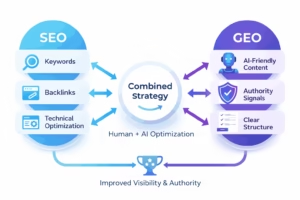
SEO and GEO aren’t rivals; they’re more like a dynamic duo.
They are partners.
Think of It Like This
- SEO is what helps AI discover your content.
- GEO is what enables AI to comprehend and utilize it effectively.
When combined:
- You’ll see improved rankings.
- You’ll gain more citations.
- You’ll establish your authority in the field.
👉 This hybrid approach is the future.
Key SEO Ranking Factors for 2026. GEO vs SEO for 2026
1. Search Intent Comes First
Google puts search intent ahead of keywords.
You must answer:
- Informational intent
- Commercial intent
- Navigational intent
Using short sentences is beneficial here. A clear structure makes a bigger impact.
2. Topical Authority
Google prefers depth.
A well-developed topic cluster is far more effective than ten shallow articles.
👉 Example:
Rather than posting random AI content, create a comprehensive hub focused on AI optimization.
Suggested internal link:
mindliftly.com/chatgpt-5-1-thinking-vs-instant-comparison-use-cases-smart-tips/
Key GEO Optimization Factors for 2026. GEO vs SEO for 2026
1. Clear Answers First
AI really likes it when you get straight to the point.
Kick off each section with a summary. Then dive into the details.
2. Structured Content
Use:
- Bullet points
- Lists
- Headings
This makes it easier for AI to pull out the information it needs.
3. Authority Signals
AI tends to trust content that demonstrates:
- Experience
- Expertise
- Real examples
- Data
Don’t forget to mention the tools you use. Break down the processes. And make sure to show some depth.
How to Optimize Content for GEO (Step-by-Step)
- Start by answering the main question right off the bat.
- Make sure to use a friendly, conversational tone throughout your writing.
- Don’t forget to include definitions for any terms that might need a little clarification.
- Back up your claims with solid data to add credibility.
- Steer clear of unnecessary fluff that can distract from your message.
- Keep your paragraphs nice and short for better readability.
👉 This article follows that exact structure.
SEO + GEO Content Strategy for 2026
The Winning Formula
Human first. AI second. Search engine third.
That order matters.
Smart Workflow
- Research user intent
- Write helpful content
- Optimize structure
- Add SEO signals
- Refresh content regularly
Tools for GEO and SEO Success
SEO Tools
- Google Search Console
- Ahrefs
- SEMrush
GEO & AI Tools
- ChatGPT
- Perplexity
- Google SGE
👉 Use AI to improve clarity, not to replace thinking.
Common Mistakes to Avoid
- Overloading with keywords
- Writing solely for algorithms
- Neglecting AI-driven search trends
- Putting out shallow content
- Forgetting to keep things updated
Staying fresh is more important than ever.
Future Trends: What Comes After 2026?
- Voice-based AI search
- Personalized AI answers
- Brand authority > backlinks
- Content as training data
Your website becomes a knowledge source, not just a blog.
Frequently Asked Questions (FAQs). GEO vs SEO for 2026
What is GEO in SEO?
GEO focuses on optimizing content for AI-generated responses rather than just traditional search rankings.
Is SEO dead in 2026?
Not at all. SEO continues to be a key player in driving discovery. GEO simply boosts visibility.
How do I optimize for ChatGPT?
Make sure to use a clear structure, keep your answers concise, adopt an expert tone, and ensure factual accuracy.
Does GEO bring traffic?
In a roundabout way, yes. It helps build trust, authority, and keeps your brand top of mind.
Should beginners focus on GEO?
Absolutely. GEO values clarity more than backlinks.
Strong Call to Action (CTA). GEO vs SEO for
Search is changing.
AI is not waiting.
If you want to win in 2026:
- Stop choosing between SEO and GEO
- Start combining both
👉 Future-proof your content strategy today.
Explore more guides on mindliftly.com and stay ahead of AI-driven search.
Conclusion: The Future Belongs to GEO + SEO Together
Fast forward GEO vs SEO for 2026, and search isn’t just about climbing the rankings anymore. It’s about earning trust, being cited, and making a lasting impression.
While traditional SEO still plays a vital role in getting your content noticed, GEO takes it a step further by ensuring that your insights are utilized by AI engines that are now pivotal in how people seek answers.
When you combine both:
- SEO enhances your visibility
- GEO establishes your authority
- Together, they safeguard your brand’s future.
The champions of 2026 won’t be those chasing after algorithms. Instead, they’ll focus on crafting clear, valuable, and well-structured content that resonates with both humans and AI.
By starting your optimization journey today, you won’t just weather the next wave of search changes—you’ll be at the forefront of it.
👉 Now is the perfect moment to align your strategy with GEO + SEO and stay ahead in the era of AI-driven search.
- External Links .
- Google Search Central.
- SparkToro research.
- Gartner AI predictions .
- Internal Refrences .
- ChatGPT 5.1 U.S. Updates: New Features You Need Now.
- ChatGPT WhatsApp Tricks, Viral AI Hacks in India, Pakistan & UAE
About the Author
👤 Muhammad Ibrahim – Founder of Mindliftly
Muhammad Ibrahim is a technology writer and wellness advocate who loves to dig deeper into the potential of AI to enhance mental well-being, productivity, and personal growth. An experienced researcher with years of tracking emerging technologies, he brings scientific perspective and actionable strategies to guide readers to understand AI-fueled tools for daily calm and clarity.
Through Mindliftly, Ibrahim offers guides, comparisons, and action plans that link AI innovation to people’s well-being. His vision is straightforward: to enable humans to live more conscious, stress-free lives through responsible and effective use of AI.
📩 Connect with Muhammad:
- Website: Mindliftly.com


